
From free coaching and AI training for one crore youngsters to a nationwide sports talent hunt, semiconductor expansion and a 100 GW nuclear energy goal, PM Modi’s Red Fort address outlined a broad roadmap for India’s development by 2047.
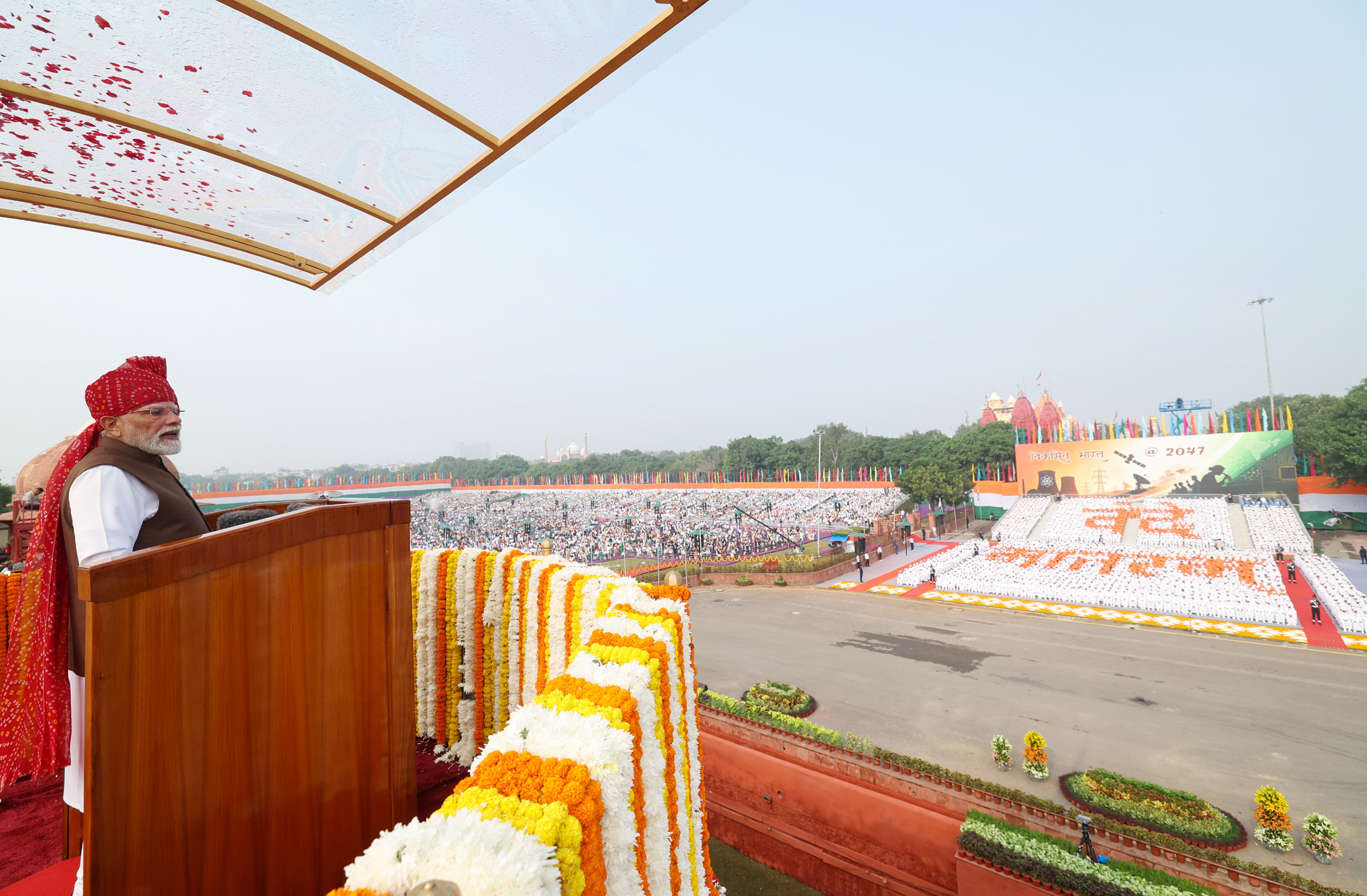
New Delhi: Prime Minister Narendra Modi used his Independence Day address from the Red Fort on Saturday to lay out an ambitious roadmap for a “Viksit Bharat” by 2047, placing India’s youth, technological capabilities and economic self-reliance at the centre of the country’s next phase of growth.

In his 13th consecutive Independence Day address, Modi announced a series of initiatives spanning education, artificial intelligence, sports, civil defence, semiconductors and nuclear energy. The speech also carried a strong message on manufacturing, innovation, national security and reducing India’s dependence on imports.
AI skills for one crore youth
One of the biggest announcements was a nationwide programme to train one crore young Indians in artificial intelligence over the next year. The initiative is aimed at preparing the country’s youth for an economy increasingly shaped by AI, digital technology and advanced skills. The Prime Minister presented young Indians as the key force that will drive India’s development in the coming decades.
Free online coaching for competitive exams
Addressing the financial pressure faced by families preparing their children for competitive examinations, Modi announced free online coaching for various exams. He said coaching had become a major burden, particularly for poor and middle-class families. The proposed online network is intended to make quality preparation more accessible while reducing the money families spend on private coaching.
Sports talent hunt for children
The Prime Minister also announced a nationwide sports talent hunt for children aged 5 to 15. The campaign will seek to identify sporting talent in villages, cities and schools. The initiative is being linked to India’s broader ambition of strengthening its sporting ecosystem and preparing for major international sporting events, including the goal of hosting the 2036 Olympics.
Seven to eight new semiconductor plants
Semiconductor manufacturing emerged as another major pillar of the speech. Modi announced plans to establish seven to eight semiconductor plants over the next one to two years, underlining the government’s push to build domestic capacity in a sector considered strategically important for electronics, automobiles, defence and the digital economy. The announcement fits into the larger self-reliance push, with the government seeking to strengthen India’s position in advanced manufacturing and reduce dependence on overseas supply chains.
Nuclear energy target of 100 GW by 2047
Energy security was another major theme. Modi set an ambitious target of 100 GW of nuclear power capacity by 2047, while also highlighting the expansion of nuclear infrastructure and the need for greater energy self-reliance.
The Prime Minister’s message was clear: India’s long-term development will require reliable domestic energy supplies alongside the expansion of renewable and alternative sources.
Modern civil defence network
The government will also work towards creating a modern civil defence network, strengthening the country’s preparedness to respond to emergencies and threats. The announcement came as part of a wider emphasis on national security and resilience, with Modi stressing the importance of preparing India for emerging challenges.
‘Shakti Ki Saptadhara’ for Viksit Bharat
Beyond individual schemes, Modi presented a broader seven-part development framework, described as “Shakti Ki Saptadhara”. The framework brings together manufacturing, agriculture and food processing, technology and innovation, infrastructure and connectivity, defence production, the green and blue economy, and India’s cultural and soft-power strengths. The Prime Minister linked these priorities to his larger goal of making India a developed nation by 2047.
Youth at the centre of the message
Youth empowerment was arguably the defining theme of the address. According to Hindustan Times’ analysis of the speech, references to youth appeared more than 50 times, reflecting the Prime Minister’s emphasis on young Indians as both the drivers and beneficiaries of India’s development journey.
From AI and competitive examinations to sports, entrepreneurship and employment, several of the announcements were directly aimed at expanding opportunities for the younger generation.
From ‘Fragile Five’ to a bigger economic ambition
Modi also highlighted India’s economic transformation, saying the country had moved from the “Fragile Five” phase to becoming the world’s fastest-growing major economy over the past 12 years. He urged Indian businesses, particularly MSMEs, to make greater use of free trade agreements and take Indian products to international markets. The message was closely tied to the government’s emphasis on manufacturing, exports and self-reliance.
A roadmap beyond the announcements
The Independence Day speech was therefore not limited to a set of new schemes. It combined immediate measures for students and young people with longer-term goals in technology, manufacturing, energy and national security. With AI training for one crore youth, free competitive-exam coaching, a sports talent hunt, new semiconductor plants and a 100 GW nuclear-energy target, Modi’s address sought to connect India’s demographic strength with its technological and economic ambitions.
The larger message from the Red Fort was a push towards an India that is younger in opportunity, stronger in technology and more self-reliant in critical sectors—with 2047, the centenary of Independence, serving as the defining deadline for the “Viksit Bharat” vision.